

Consultancy - Communication - Content · Team Brunel — Volvo Ocean Race
From ocean race to recruitment engine
Nine months of press work around the toughest sailing race in the world.
The situation
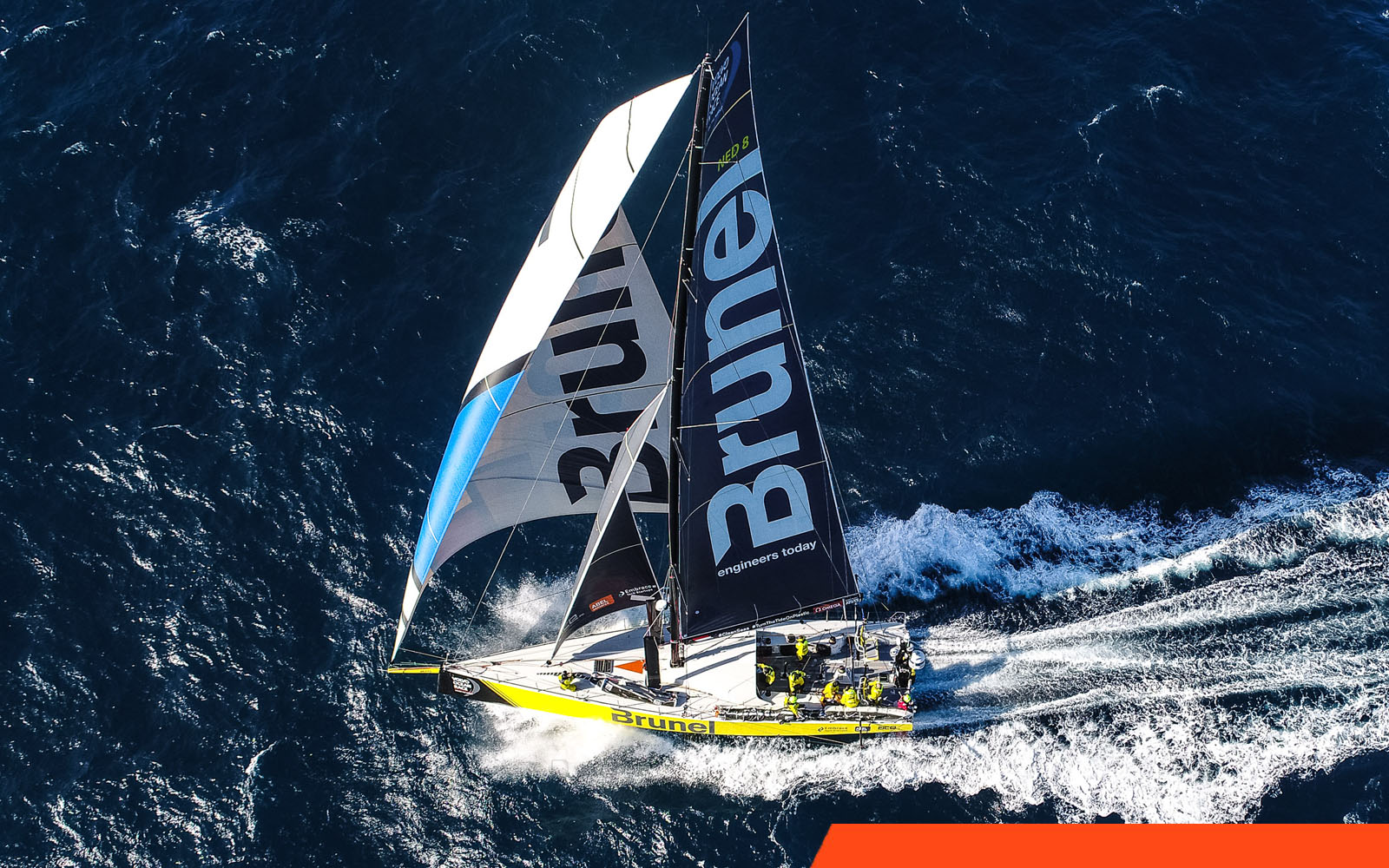
On Sunday 24 June 2018, Team Brunel crossed the finish line in The Hague. Fourth on the final leg, third overall, after 45,000 nautical miles, eleven legs and twelve host cities. One point behind second place and four behind the winner, the closest finish in the race's history ever.
That's the sporting side. The brief was something else.
Brunel is not a consumer brand. It's an international recruitment and secondment firm operating in dozens of countries, placing specialists in engineering, energy, ICT, finance and legal. For a company like that, the question after a sponsorship campaign is never "did people see our logo." The question is whether people came in. The scarce commodity isn't attention, it's staff.
Set against that is a communications problem that looks nothing like a normal campaign. The boat is unreachable at sea for weeks. The news happens thousands of miles from any newsroom. Attention spikes in twelve port cities spread across as many time zones, for a few days each time. And the only person on board with a camera is the onboard reporter, for nine months the sole source of footage from the most valuable moments of the race.
A crew that needs to concentrate on sailing. A sponsor that needs recruitment results. And a story that only exists if someone carries it from the water to the newsrooms.
What we did
Our role was press officer: responsible for spokesperson management, press operations and media strategy for Team Brunel throughout the race.
- Taught the team to speak in key messages. We trained and coached the crew on communicating the messages that mattered. Sailors are not spokespeople; after three weeks at sea, exhausted and running on adrenaline, an interview is the last thing on anyone's mind. That's exactly when it has to land. Fixed messages, recognisable language, and a crew that knew what was waiting for them ashore.
- Tied the content calendar to the onboard reporter. We set out with the OBR for every leg what had to come off the boat and when. Footage from the Southern Ocean cannot be reshot: it exists, or it never will. Planning it in advance meant the material arrived when newsrooms could actually use it.
- Media partnerships in every key territory. TV, online, radio and print — in each market where Brunel operated. Not individual placements but agreements made in advance, so every leg had a home waiting rather than a press release looking for one.
- Directed the regional press agencies. Every host city had a local agency. We instructed and supported them, maximising global exposure in the process: one story, told locally twelve times over, in the language and the news logic of that country.
- Kept the press service running. Writing and distributing press releases worldwide, organising press conferences, handling TV and print interview requests, and building the back office it all rests on: media databases and distribution channels for text, photo and video. Invisible work that carries the whole operation, a newsroom in Auckland has to find usable footage at three in the morning without calling anyone.
- Managed free publicity proactively. Not waiting for the phone to ring. Offering stories, hooking into what was live in each market, and using the moments only a race like this produces. The leg win into Itajaí after the hardest leg in the race's history, the win into Cardiff, the finish on home water.
- Stood ready for crisis. A race like this inevitably produces situations that aren't in the plan. Media handling during incidents was part of the brief: one voice, an aligned line, and a team that knows who says what before it's needed.
- Supported community management and measured everything. We instructed and supported Team Brunel's community team, and closed with evaluation and media monitoring, so that at the end there wasn't only a story, but an answer to what it had delivered.
Alongside all of that: the press service for Brunel itself within Team Brunel. Sponsor and team communicated from a single plan, not from two offices keeping each other loosely informed.
What it delivered
Team Brunel's content reached 19 million impressions, and 2.7 million minutes of video were watched across Facebook, Twitter and YouTube. More than five years of viewing time, assembled from clips of a boat in the middle of the ocean.
But the number that mattered to Brunel is a different one: 22,261 new applicants through the Volvo Ocean Race. For a company that makes its money finding scarce specialists, that isn't a reach figure, it's a business result. The race didn't produce visibility that still had to be converted into something. It produced the people themselves.
And on the water: third overall, a leg win into Itajaí after the longest and hardest leg the race had ever run, a leg win into Cardiff, and victory in the closing in-port race in The Hague.
Why this works
Press work around a sailing race is often treated as a production job: footage comes off the boat, footage goes out. That isn't how it works. The question is what the sponsor is left with at the end of the year and only then, what gets told.
At Brunel the answer was clear from the start: people. So every choice was measured against it which key messages the crew carried, which markets needed media partners, which stories we pitched and to whom. Not because recruitment is a nicer word than reach, but because a staffing firm holding 22,261 applications at the end of a sailing race can defend an investment that impressions alone would never have justified.
Communication without a commercial goal is expensive noise. A commercial goal without communication is a boat nobody sees.
Communication, marketing and sponsorship are one discipline.
Something to get done?
Call or email. One conversation is usually enough to know whether we can do something for each other.